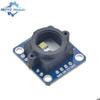
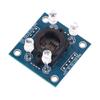
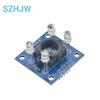
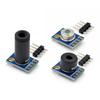
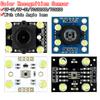
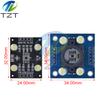
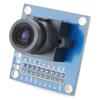
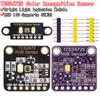
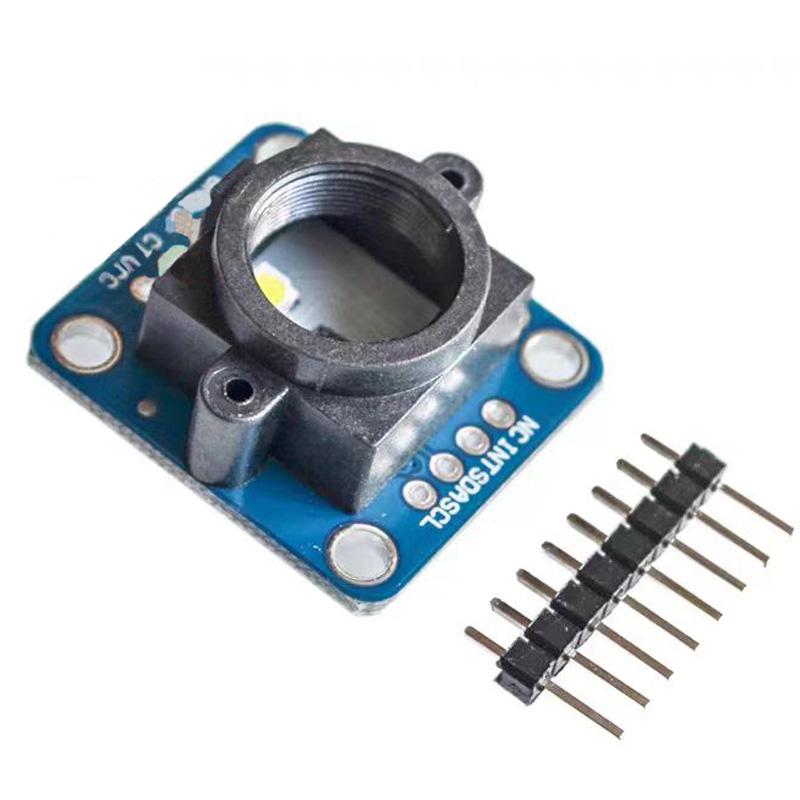
Model Number : GY-31/GY-33 TCS34725 TCS3200D/TCS230
Dissipation Power : standard
Supply Voltage : standard
Application : standard
Type : Module
Origin : China
Condition : New
Operating Temperature : standard
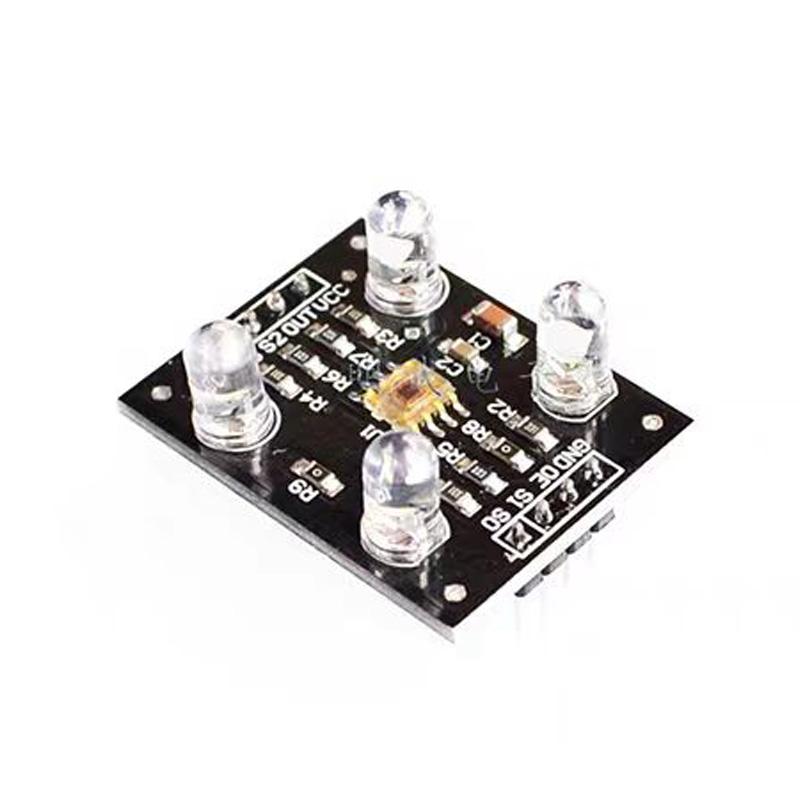
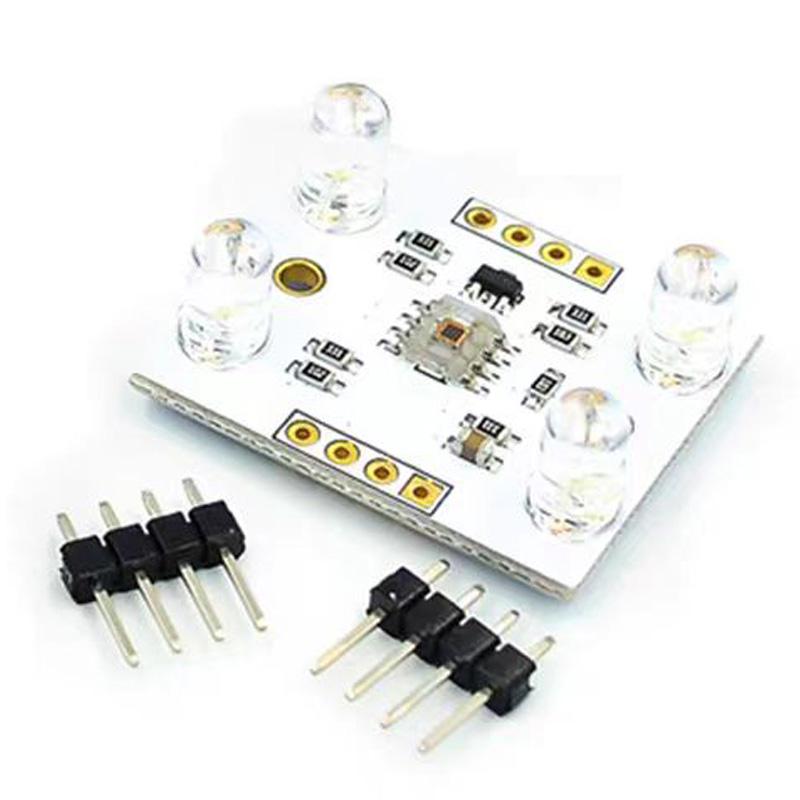
Color Sensor Principle The TCS230 is available in an 8-pin SOIC surface mount package with 64 photodiodes integrated on a single chip. These diodes are divided into four types. Sixteen of these photodiodes have a red filter; 16 photodiodes have a green filter; 16 photodiodes have a blue filter; and the remaining 16 do not have any filter and can transmit the full light information. These photodiodes are cross-arrayed within the chip, which can minimize the unevenness of the incident light radiation and thus increase the degree of color recognition; on the other hand, the 16 photodiodes of the same color are connected in parallel and evenly distributed in the diode array, which eliminates the positional error of the color. During operation, the desired filter is dynamically selected via two programmable pins. The sensor's typical output frequency range is from 2 Hz to 500 kHz, and the user can also select, via two programmable pins, an output scaling factor of 20% or 2%, or a power shutdown mode. The output scaling factor allows the sensor's output to be adapted to different measurement ranges, increasing its adaptability. For example, when using a low-speed frequency counter, a small calibration value can be selected to match the TCS230's output frequency to the counter.
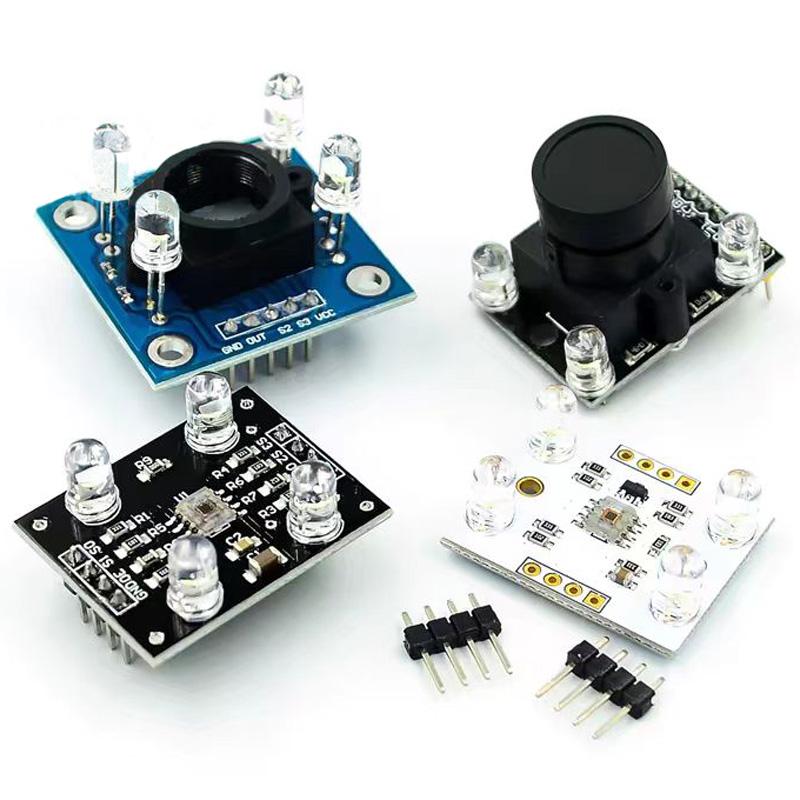
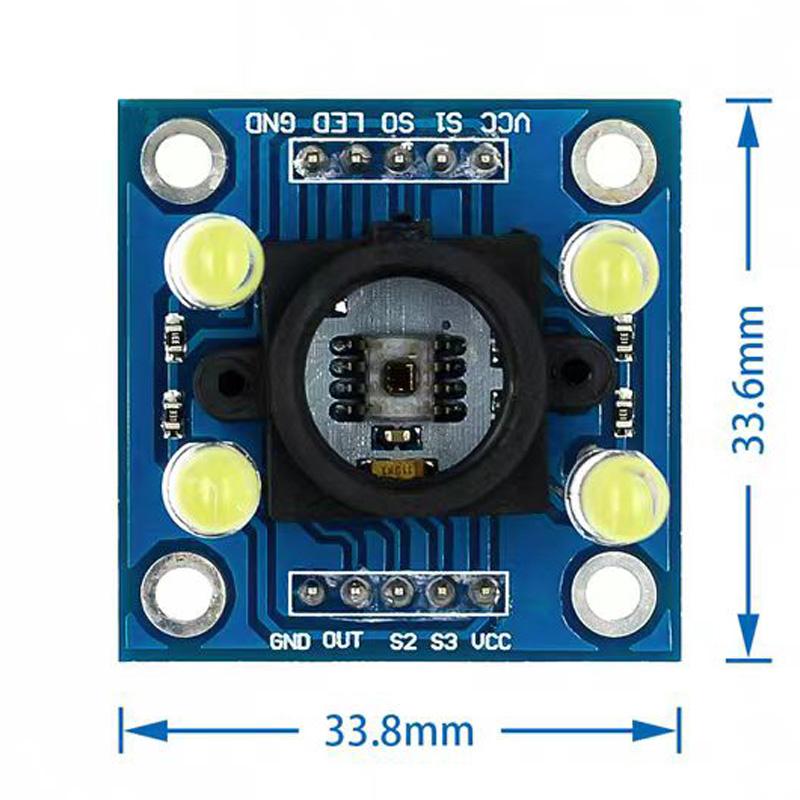
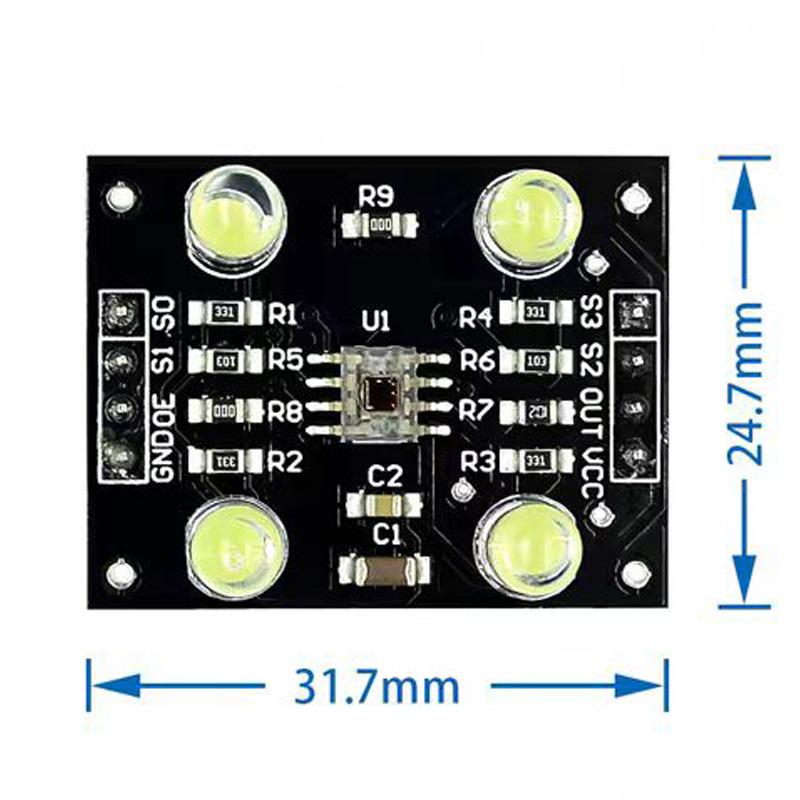
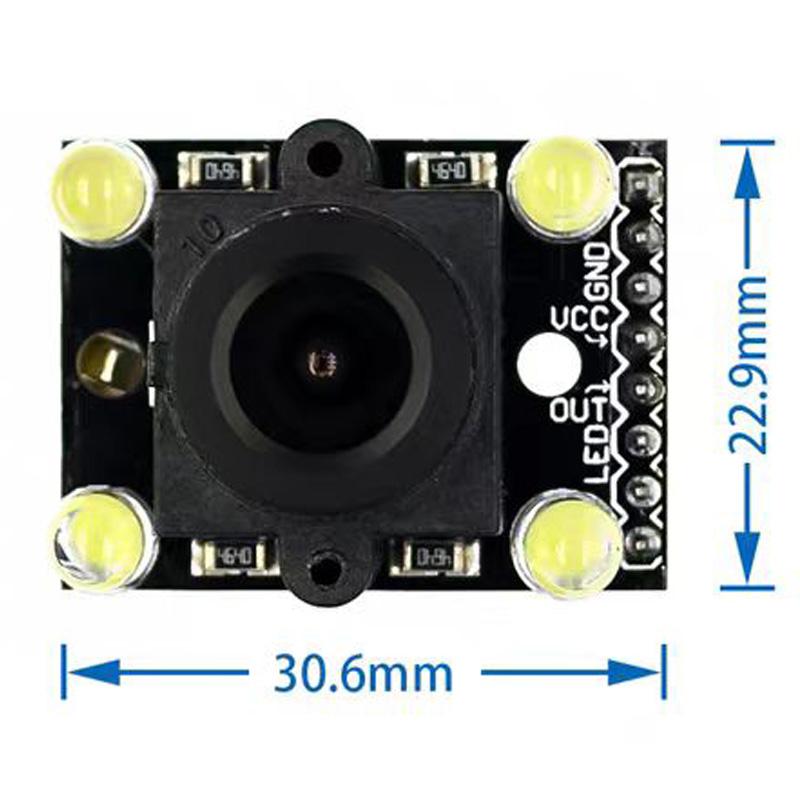
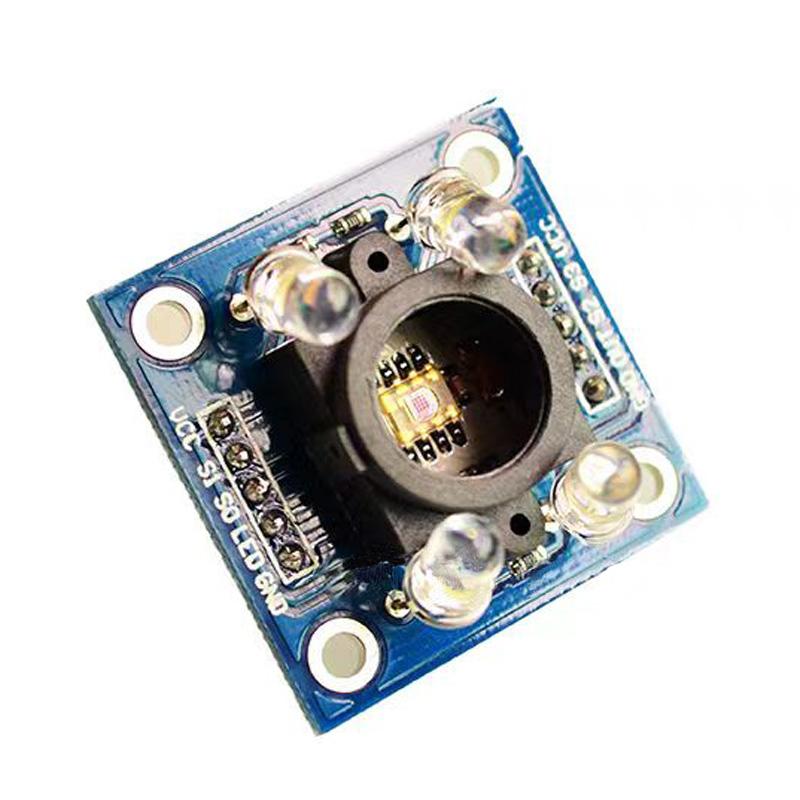
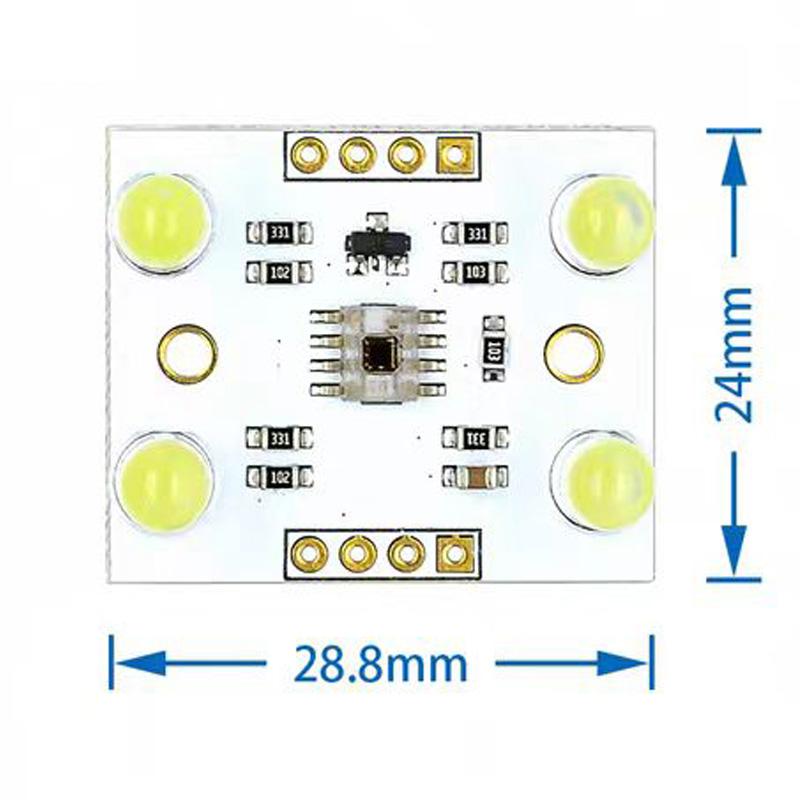
Product Description:1, using the original imported chip TCS3200 PCB board with gold-plated technology2、TCS3200 is an upgraded version of TCS230 with better effect.3、Power supply 3-5v4、Anti-light interference5、White LED, can control the light, extinguish.6, can detect the color of non-luminous objects7, PCB size: (L) 33mm * (W) 25mm
The simple test program is as follows:
#include<reg52.h
#define uchar unsigned char
#define uint unsigned int
sbit S0=P1^0; //S0,S1 is to set the duty cycle of the output.
sbit S1=P1^1.
sbit S2=P1^3; //S2,S3 is to set the mode of light consideration
sbit S3=P1^4; sbit OE=P1^4; //S2,S3 is to set the mode of light consideration.
sbit OE=P1^2; //Enable
void RS232_init()
{
TMOD=0X20; //Timer1 working in mode 1
SCON=0x50.
PCON=0X80; //
TH1=TL1=0XFF;//22.1184M crystal, baud rate set to 115200
TR1=1.
TR1=1; TI=0.
RI=0.
}
void send_char(uchar a) // send data
{
SBUF=a;
while(TI==0);
TI=0;
}
uchar get_char() //receive data
{
while(RI==0);
RI=0;
Return SBUF;
}
uint color_display(uchar m)
uint color_display(uchar m)
uint time,a.
a=m.
TMOD=0x61; //counter 1, timer 0 works in 16-bit mode
TH0=TL0=0; //count from zero, timing
TH1=TL1=0.
S0=1.
S1=1.
S2=m&0x01.
S3=m&0x02.
OE=0.
TR0=TR1=1.
while(TL1<250);
TR1=TR0=0.
OE=1.
time=TH0*256+TL0.
return(time);
}
void main()
{
uint temp;
RS232_init();
OE=1;
while(1)
{
temp=color_display(get_char());
RS232_init();
send_char(temp/1000);
send_char(temp%1000/100);
send_char(temp%100/10);
send_char(temp%10);
}
}
The serial port is used to select the channel for the color type, and then the different colors are determined because they correspond to different times (with the same counting values).
The line layout is compact and regular, with good electrical insulation and mechanical stability, and can maintain stable performance under different temperature and humidity environments to ensure accuracy and reliability.
In circuit design, carefully planned lines are like precision transportation networks, and lines of different widths and spacings undertake different currents and signals transmission tasks respectively. The key signal lines are impedance matching processing, which greatly reduces signal reflection and attenuation and ensures the stable transmission of high-frequency signals.
All kinds of electronic components are soldered on the circuit board, and the solder joints are full, round, and firm and reliable. Core components like chips are perfectly connected to the circuit board through fine packaging processes to achieve high-speed data processing and interaction.
This circuit board has a wide range of responses in many fields. Whether in the industrial control field that requires extremely high stability or consumer electronics field that pursues extreme performance, it can provide solid guarantees for the stable operation of the equipment with its excellent design and reliable performance, and help various electronic devices play a powerful role.


 Rambursare în caz de nelivrare