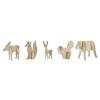
Easy-to-grasp design with easy-to-identify animal species
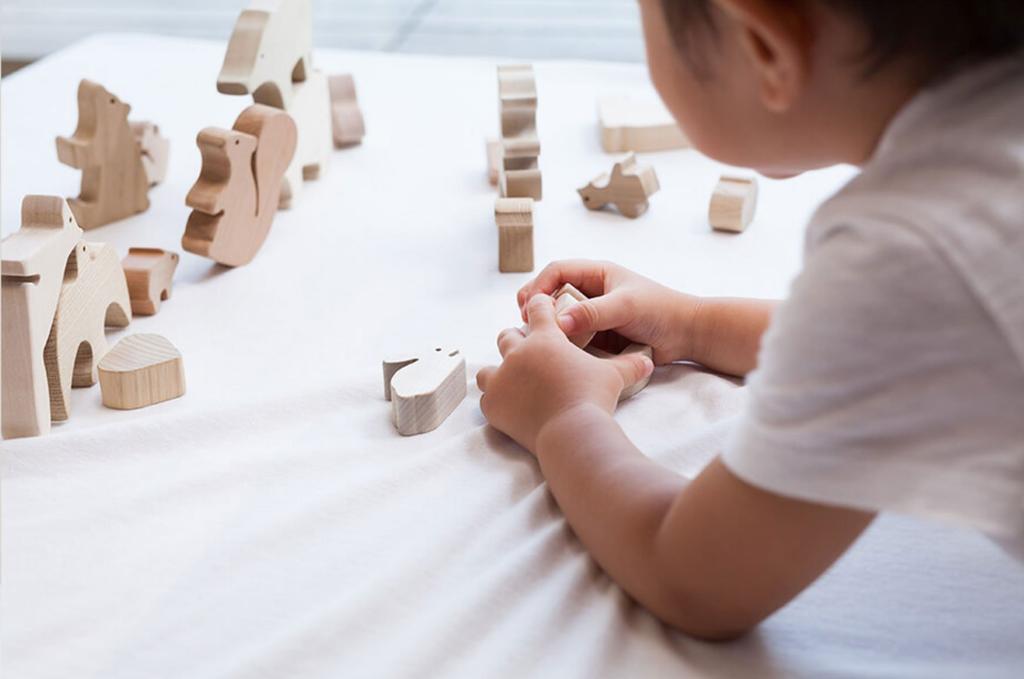
We selected animals that have long lived in Japan's satoyama (satoyama woodlands), coexisting with humans. The design is based on an easy-to-identify animal type, easy-to-grasp, and stack shape, taking into consideration the direction of the wood grain and safety.
Tips for Play
・Touch
There are various animal pairs and parent-child pairs. Close your eyes and touch them to enjoy guessing the animal. Different types of wood have slightly different colors and scents. Rough, smooth, and the texture varies from piece to piece. Above all, try to feel the warmth of the wood.
・Find
You can enjoy finding parent-child pairs, friends, just children, just parents, or the same tree.
・Pretend Play
Try making up stories with your favorite animals. You're sure to create a beautiful forest. You can also develop this into a forest ecosystem and the connections between animals.
・Arrange
Stand the animals up and arrange them horizontally or vertically. Enjoy long lines, height comparisons, and all sorts of discoveries. You can also turn the animals sideways and match the protrusions and depressions to create a puzzle.
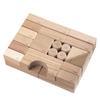
Stacking
How many can you stack? How can you stack them? The possibilities are endless. Try using other building blocks and toys to expand your world.
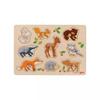
Puzzle Play
Under the animal packaging, a puzzle illustration is printed on bright green paper reminiscent of fresh greenery, allowing you to play with it as a puzzle. You can also have fun tidying up by matching the blocks with the illustrations. (120)
[Oak Village]
Since its founding in 1974, Oak Village has been committed to creating products using the renewable resource of wood, striving for a sustainable, recycling-oriented society.
Utilizing the traditional "kikugumi" (woodworking) technique and extensive knowledge of wood, we create a wide range of products, from furniture and toys to stationery, lacquerware, and other woodworking items, as well as wooden buildings.
[Materials]
Using Japanese solid wood in the right place.
With approximately 70% of Japan's land area covered by forests, we are committed to using domestically produced timber to make effective use of its forest resources and propose a lifestyle in harmony with the environment.
Japan is home to a wide variety of tree species, and we particularly focus on hardwoods. The hardwoods grown in Japan are diverse, with many high-quality, dense lumber, each with its own unique character. While conifers such as cedar and cypress grow quickly and straight, hardwoods such as oak and birch require highly specialized sawing and processing techniques tailored to the unique characteristics of each species.
By understanding the characteristics of each tree species, such as grain, color, and strength, we aim to make full use of nearby forest resources in the "right material for the right place."
[Technology]
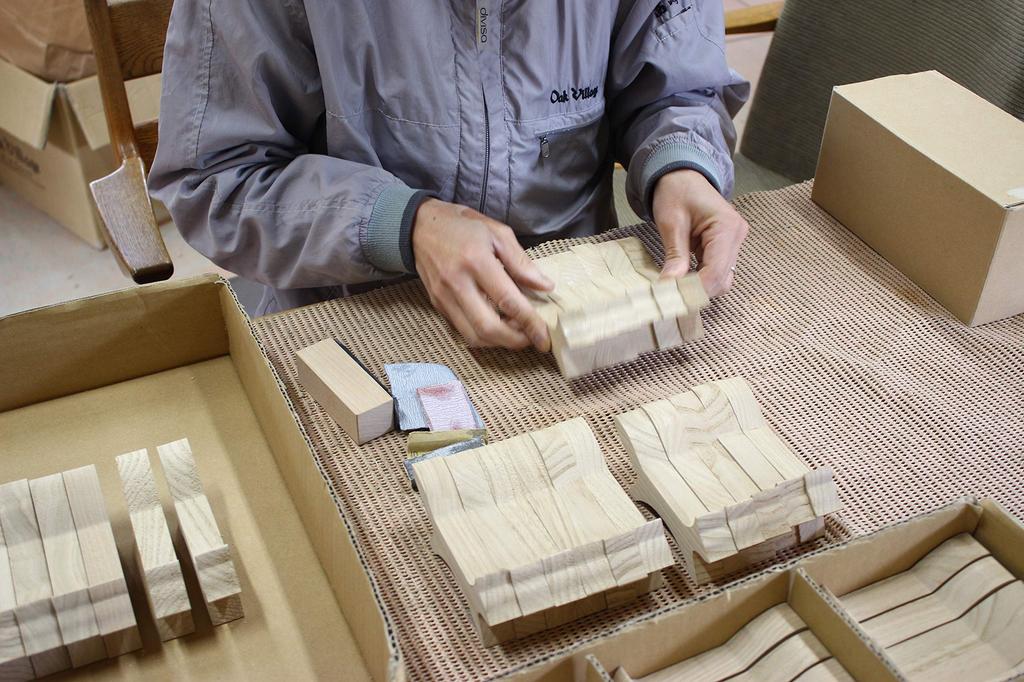
Using the skills of Hida artisans to create products that will last.
To maximize the beauty and durability of solid wood, we use the "kigumi" (woodworking) techniques passed down by Japanese artisans, aiming to create products that will last for generations.
Kigumi requires advanced processing techniques, as it requires understanding the characteristics of wood and applying construction methods appropriate to the intended purpose.
While this construction method is a traditional technique cultivated by the Japanese people since ancient times, we have further evolved it and developed techniques suited to the structure and uses of modern furniture and woodwork.
[Design]
Bringing out the full appeal of wood
Design is not just about pursuing aesthetic beauty; it also considers usability and safety, as well as how to reflect the material's properties and atmosphere in its form. For this reason, we incorporate the concept of "the right material in the right place" in our designs, striving to maximize the appeal of wood.
For example, our "Kabano Desk" series is made from birch, a hardwood that grows abundantly in Japan. The design highlights the edges, a unique expression of hard, dense wood. The wooden toy line "Anomatope" incorporates motifs inspired by natural forms like pebbles and tree branches, aiming to help infants and toddlers better connect with the natural world.
We also strive to enhance the appeal of wood through design, while constantly updating our products to keep up with the times.
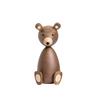
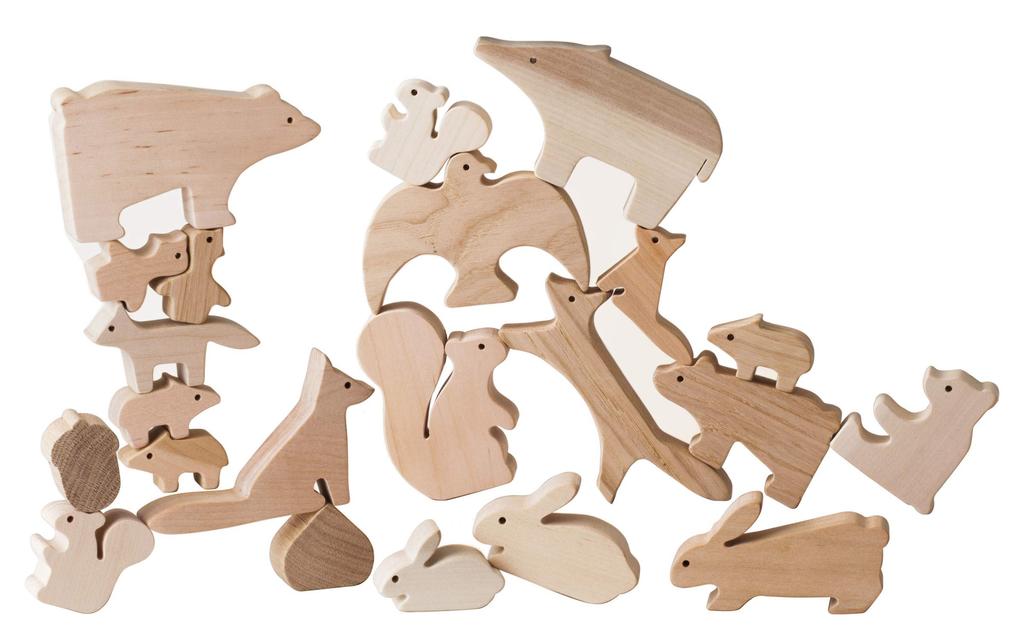
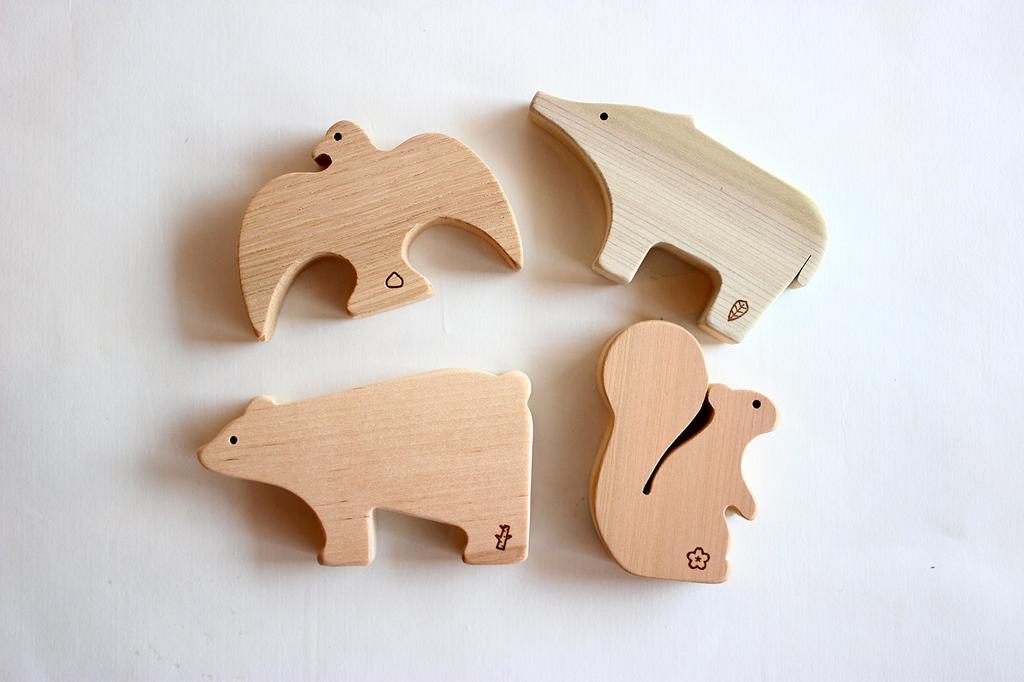
[Forest Animal Building Blocks Crafted by Artisans in Hida Takayama] Experience the comfort of natural materials and connect with the animals with your body, bringing joy to your heart. These building blocks featuring Japanese forest animals were crafted by artisans in Hida Takayama. These wooden educational toys are crafted with unpainted Japanese wood.
[Set Contents] Includes 22 pieces, including bear, hawk, wild boar, rabbit, squirrel, fox, acorn, and chestnut. *Includes a pamphlet explaining the animals and how to play with them.
[Selected by Good Toys] Japan's overflowing toy market is overflowing. Many toys sell out soon after being released. The Good Toy Selection System was launched in 1985 to provide a guide for selecting high-quality toys from among those commercially available.
[Please note] Because natural materials are used, the grain and color may differ from the image. This is due to the unique characteristics of the wood.
[Material] Cherry, beech, chestnut, birch, oak [Painting] Unpainted [Size] Largest piece: 120mm W x 20mm D x 70mm H, Smallest piece: 50mm W x 20mm D x 30mm H, Package size: 325mm W x 320mm D x 33mm H [Country of origin] Japan [Weight] Approximately 800g *This product is a [assembled product]





 Rambursare în caz de nelivrare


![Set de sculptură în lemn pentru interior cu animale [T-Lab]](https://img.joomcdn.net/94c06214c0ab0d4bdc39759bbe565c1eb5983438_100_75.jpeg)