[Important Note - For Overseas Customers]
Thank you for purchasing this product. Please read the following important notes carefully before using this product overseas.
1. Legislation and safety standards
This product complies with Japanese safety standards. Please check compatibility with local regulations and safety standards before use in your country.
Certain product categories (electronics, cosmetics, food, etc.) may require certification from the importing country.
2. About electrical products
[Voltage compatible]
When using electrical appliances, please note that they are designed according to Japanese voltage specifications (90-110V), so using them at a different voltage may cause malfunctions.
[Plug type]
Our products use the Japanese plug type (A type or B type).
Please use a conversion adapter if necessary.
[Important notes regarding transformers and adapters]
A transformer adjusts the voltage to suit the requirements of the equipment.
Conversion adapters only change the shape of the plug and do not adjust the voltage.
Using only the conversion adapter without a transformer may damage the product.
[About responsibility]
We are not responsible for any failure or damage caused by improper usage, such as operating the product without a transformer.
3. Language and manual
Product instructions and displays may only be in Japanese.
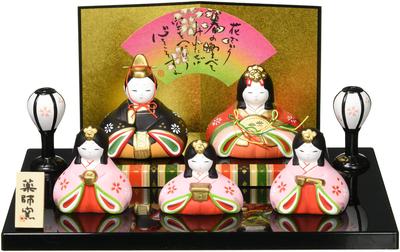
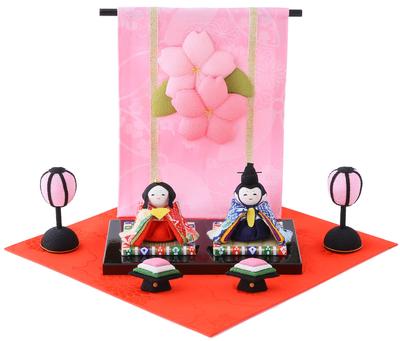
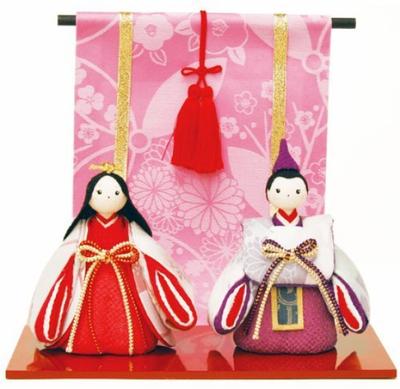
This Hina doll (Hina doll) by Koichi Matsuzaki is 33cm wide x 21cm deep x 20cm high. It comes in a display case, is compact, cute, and features a round face and wood grain. This stylish miniature doll is displayed in a display case by Koichi Matsuzaki.
A Hina doll in a small, compact wooden case that can be displayed.The plain wood case makes it a lovely addition to a living room or interior.
The mini size makes it perfect for sending to your second or third daughter.
This compact, mini-sized Hina doll comes in a display case. Perfect for celebrating a girl's first festival, this traditional craftsman, Koichi Matsuzaki, crafts this round-faced, wooden doll with crepe fabric and flowers. This stylish and cute doll is made of white plain wood and features a wood grain inlay. Perfect for celebrating a girl's first festival, this small, cute doll is perfect for a small celebration.
This compact, cute Hina doll comes in a display case. This stylish, miniature doll features a round face and is crafted from wood. The pink crepe flowers accent this charming doll, adding a touch of femininity.
Why display Hina dolls? The origins of Hinamatsuri (Girl's Day). The custom of displaying Hina dolls as Hinamatsuri (first festival of the year) dates back over 1,000 years to the mid-Heian period. During that time, the first day of March, the day of the snake, was known as Jōmi no Sekku (Jōmi no Sekku), an event held to purify children and pray for their health and safety. Using the hands of onmyōji (onmyōji), food offerings were made, and dolls (hitogata) were used to transfer misfortune and evil onto the dolls, which were then floated down the river or into the sea. Around 600 years ago, this was combined with the "playing house" (otomo azobi) known as "hina asobi" (playing house with toys) in the early Muromachi period, resulting in the modern-day hina dolls, which began to be performed at the Imperial Court. The word "hina" (hina) means small and cute, like a bird, and playing house with small dolls (hina dolls) and accessories was called "hina asobi" (playing house with toys). Hina accessories were part of a bride's dowry. It wasn't until the end of the Warring States period and the beginning of the Edo period that Hinamatsuri and Hina dolls became widespread across the country as they are today. Although the areas where Hina dolls are displayed differ, the Hinamatsuri began as a celebration of the samurai class (in Edo and Kyoto) and then spread to townspeople, and then to the countryside, where it is celebrated every year with great vigor.