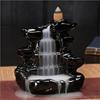
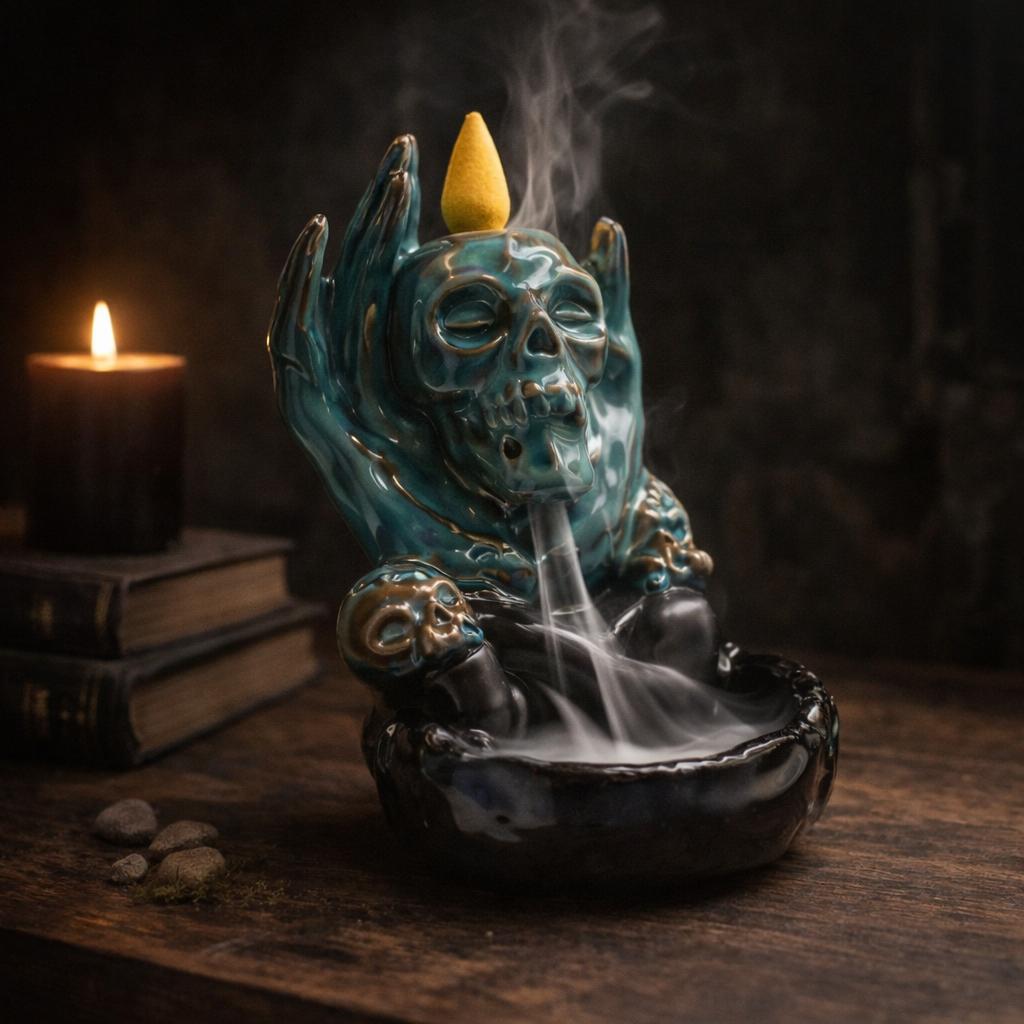
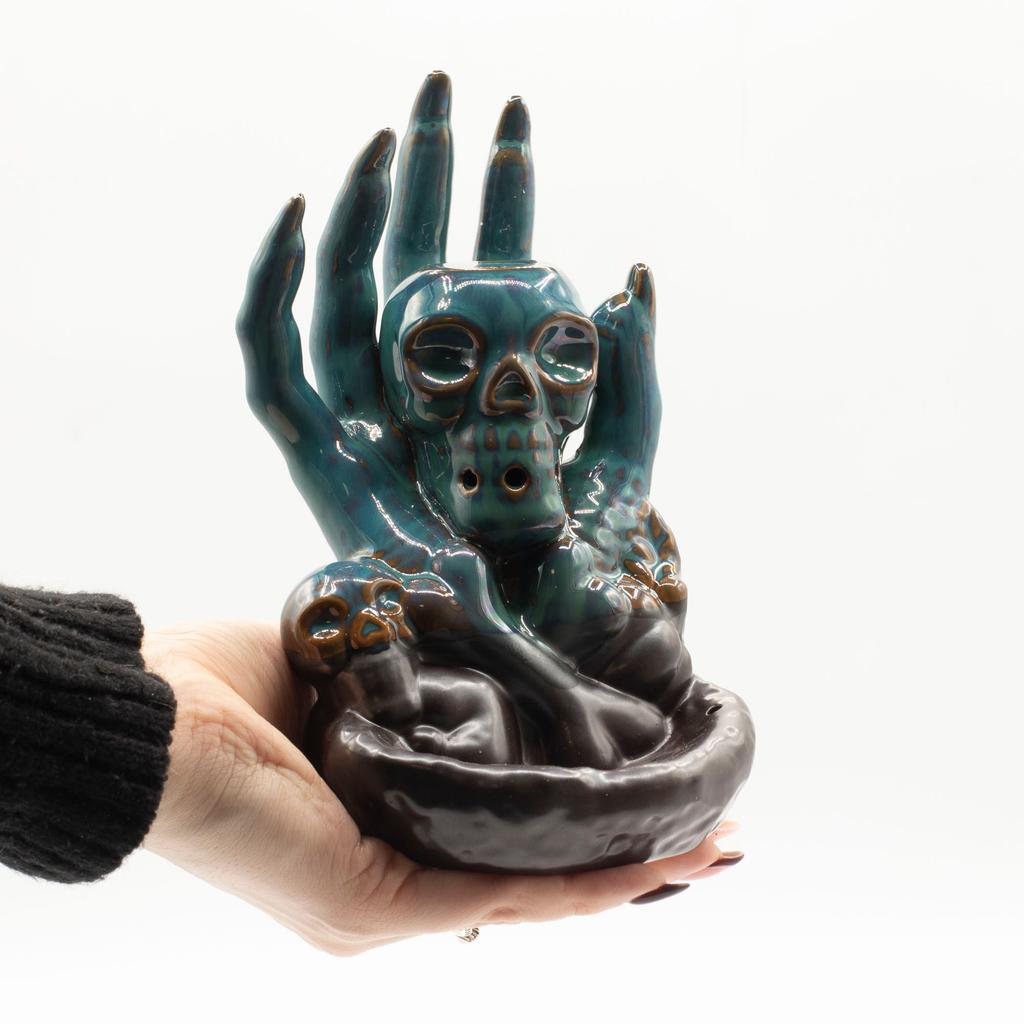
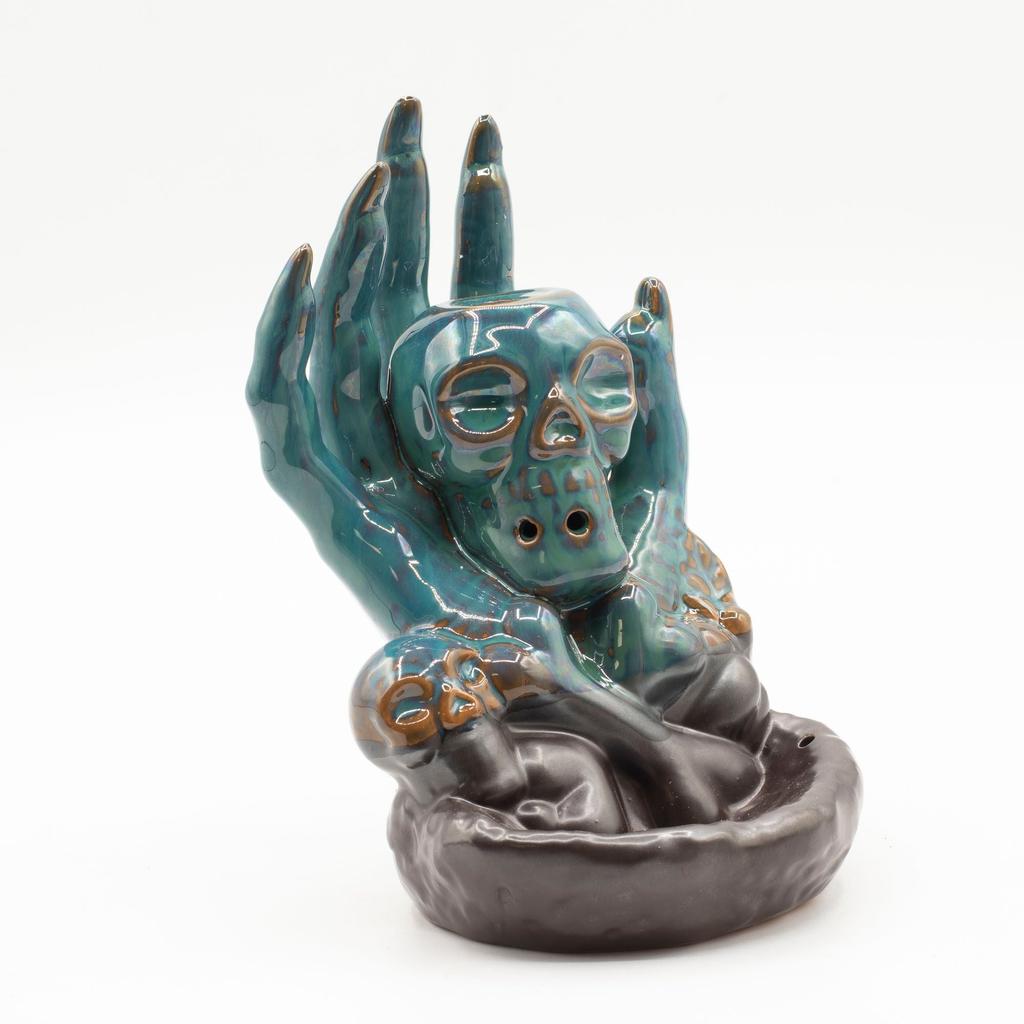
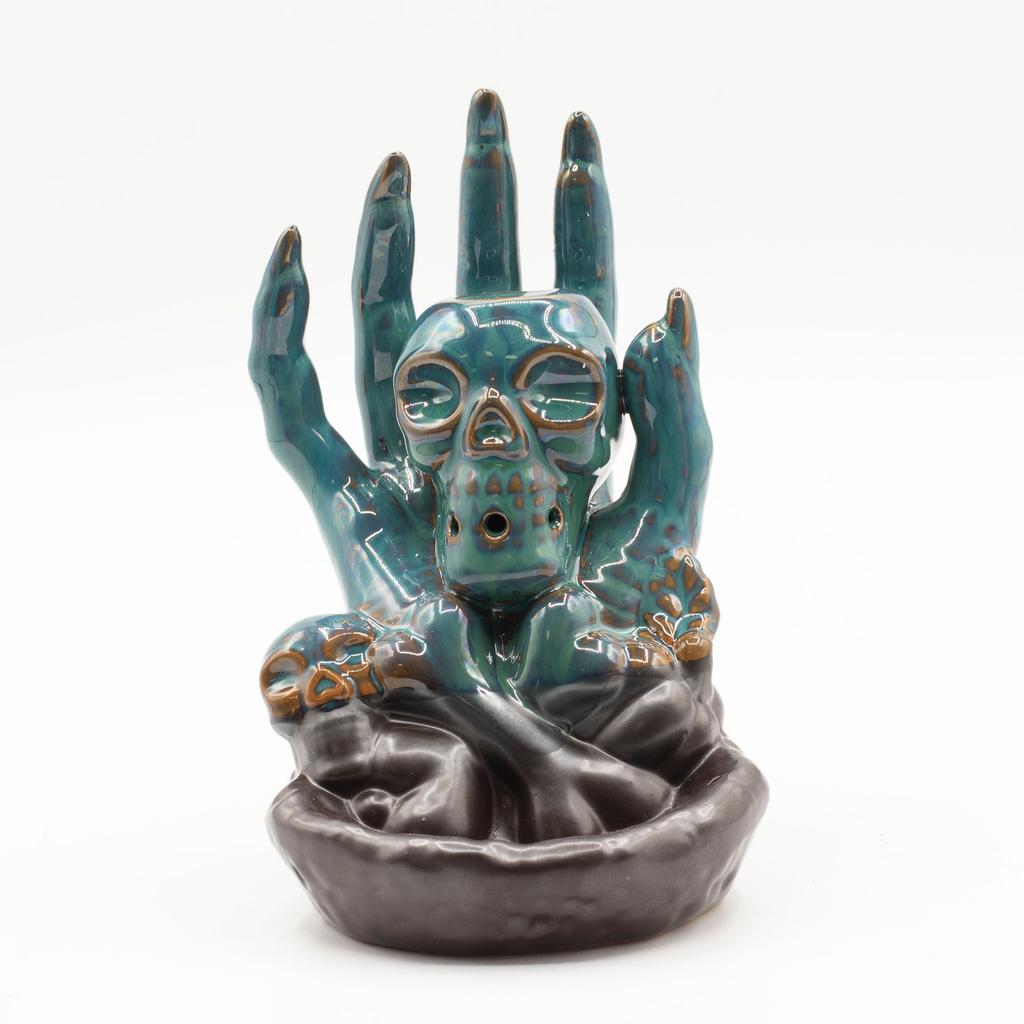
Set a backflow cone at the top, light it, and the incense becomes a small piece of theatre. Smoke gathers and falls through the skull, collecting in the hand-shaped base below for a darker, more atmospheric ritual moment.
Smoke that falls through the skull
Made for backflow incense cones, so the smoke travels downwards rather than rising straight away.
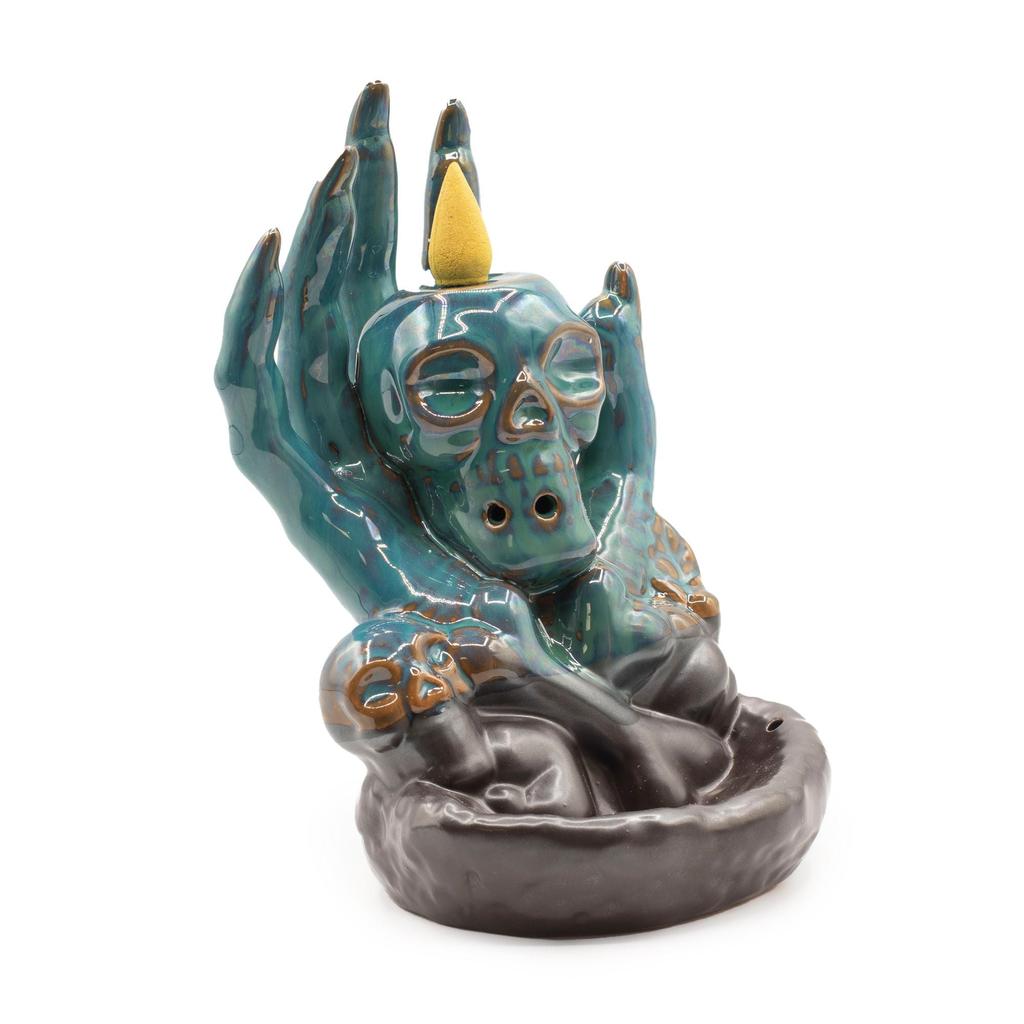
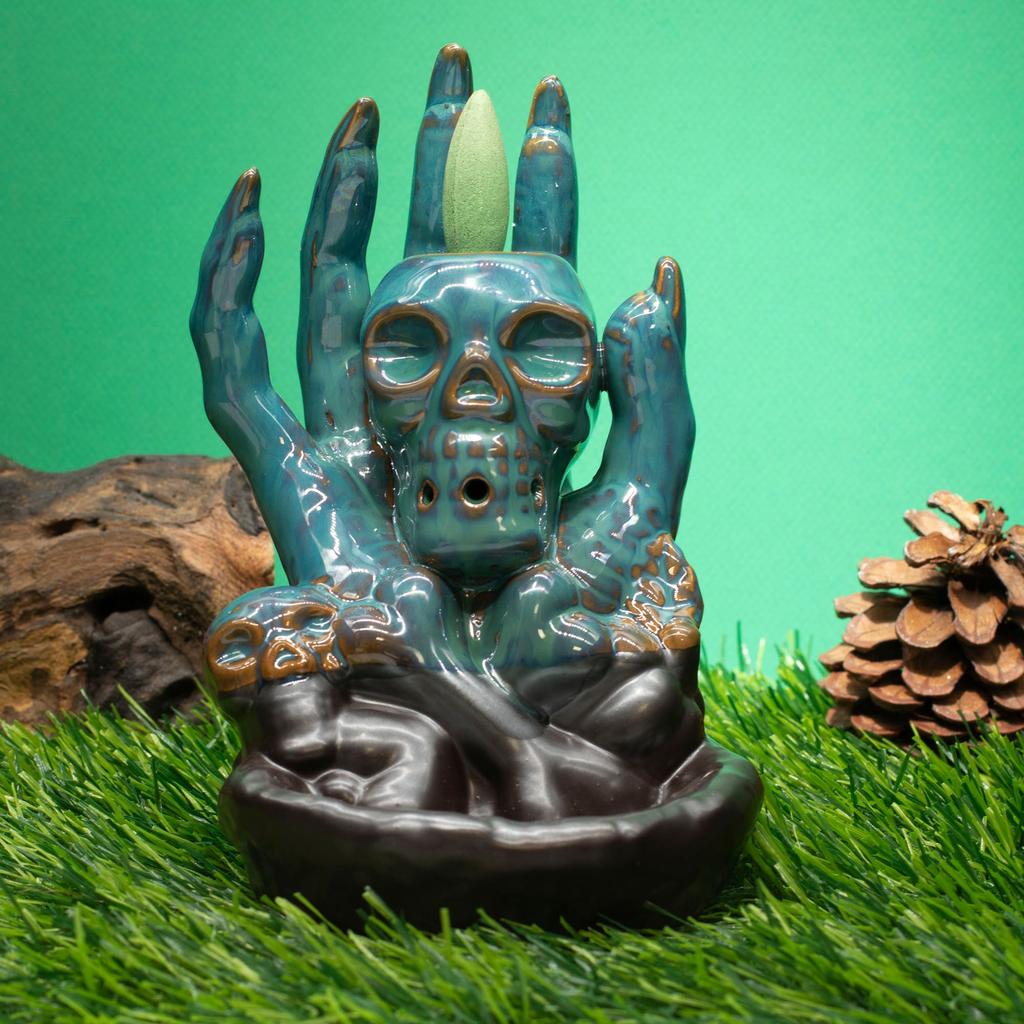
The skull-in-hand form gives the whole piece a gothic, contemplative mood on a shelf, desk or ritual corner.
The base helps contain the falling ash from the cone, keeping the focus on the slow movement of smoke.
Ceramic gives it a solid, cool presence, with enough weight to feel steady in place.
It suits evenings, quiet rooms and dramatic incense blends where the visual effect matters as much as the scent.
Ceramic with a sculptural gothic form
This incense burner is made from ceramic and shaped as a skull resting within a hand. The material suits the detailed, sculptural look, while the form turns a simple cone into a more deliberate focal point.
How the backflow effect works
Use it with backflow incense cones only. These cones are made with a small channel that encourages the smoke to sink, so it can move down through the burner and pool in the base below.
Place the cone on the burner’s intended point, light the tip, then let the flame go out so the cone smoulders. The burner itself is not heated; the incense creates the smoke.
Using and caring for it
Always place the burner on a stable, heat-safe surface before use, away from draughts, fabrics and anything flammable. Let the cone finish fully, then allow the ceramic to cool before handling or cleaning.
Empty loose ash after use and wipe the surface with a dry or slightly damp cloth. Avoid soaking it, and make sure it is fully dry before the next cone.
A motif with shadow and presence
Skulls have appeared across art, ritual objects and decorative traditions as reminders of mortality, change and the passing nature of time. Here, the image is …
region of manufacture: China


 Rambursare în caz de nelivrare

![Tămâie cu reflux Arzător de tămâie ceramic elegant pentru flux cu reflux Design interior drăguț pentru Feng bun și vindecare [HARGIO] Arzător, Tămâie, Tămâie,](https://img.joomcdn.net/80bd013840e261c54b3d5fc009d0610a0b9fe00c_100_100.jpeg)