Cotton Wall Art (70x110cm) – Dead of the Dead Skull


Descriere
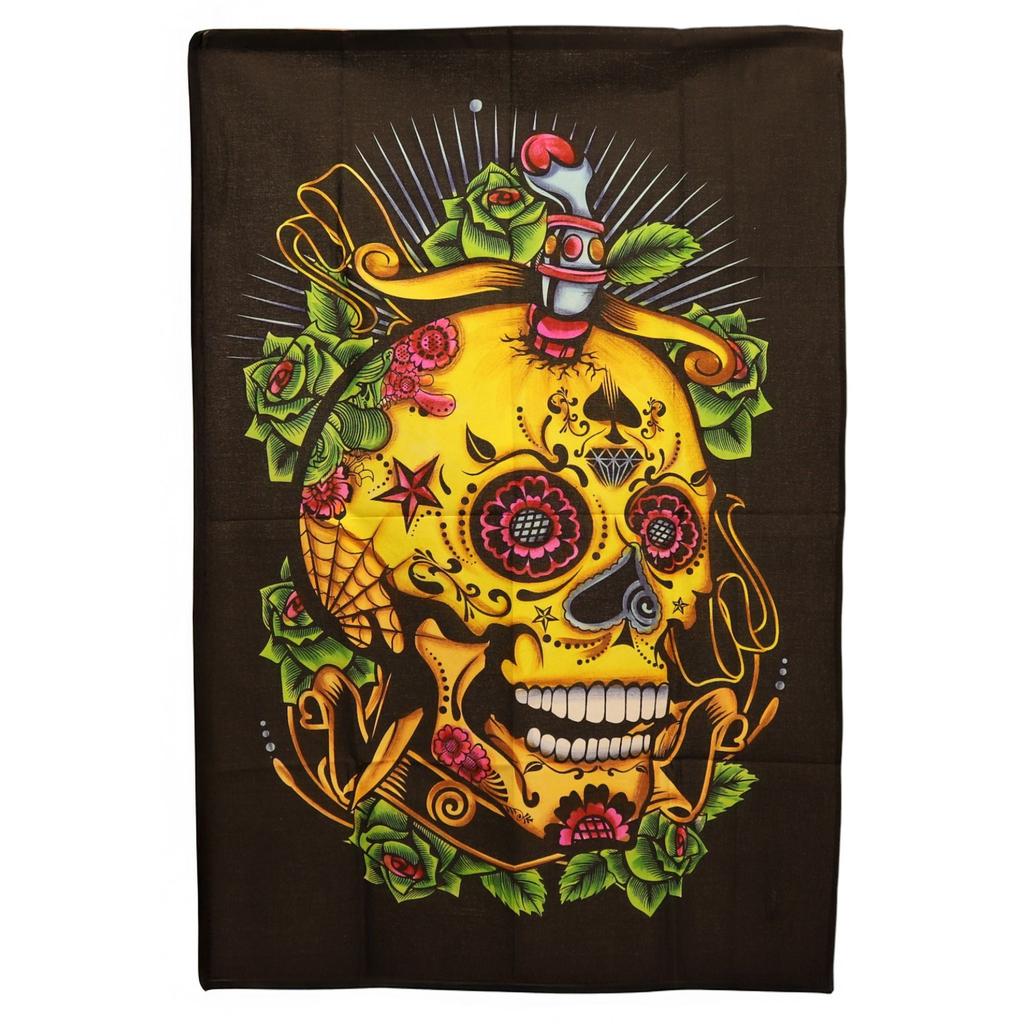
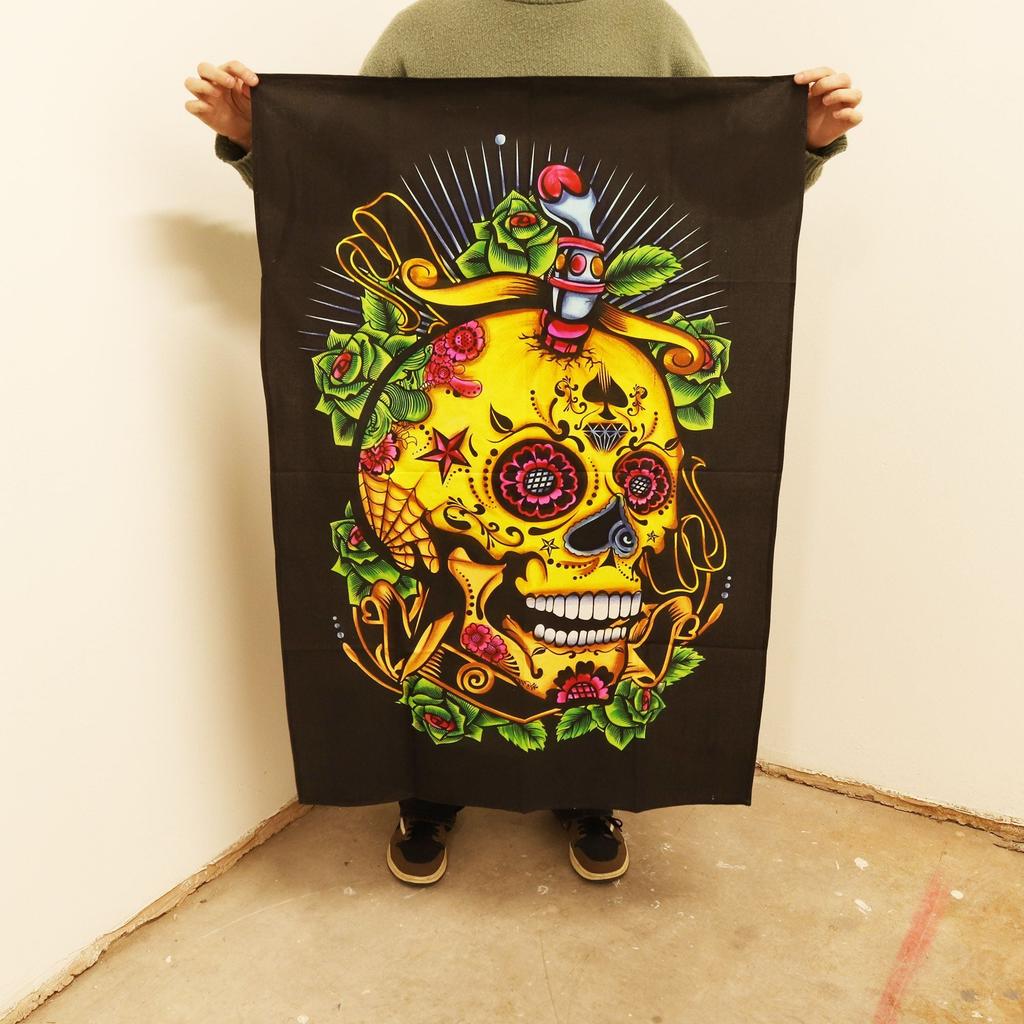
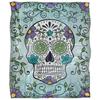
A screen-printed cotton wall hanging showing a large decorated skull in the calavera style associated with Día de los Muertos — the Mexican Day of the Dead. Bright yellows, greens, and pinks over a dark background. This is the only design in the wall art range that draws from Latin American folk art rather than South or East Asian traditions, and it's the only skull. It brings a completely different energy to the collection: celebratory, bold, slightly irreverent, and more pop-art than contemplative. 70cm wide by 110cm tall, 95 grams, made in India. What's Here
The skull dominates the composition. This is a calavera — a decorated skull rendered with flowers, swirls, and ornamental patterning in the Día de los Muertos tradition. The surface of the skull is filled with colour and detail rather than left bare or anatomical. That's the entire point of the calavera style: death is dressed up, decorated, made vivid and beautiful rather than morbid. The skull is the subject and the canvas at the same time. The colour palette is high-contrast and deliberate — bright yellows, greens, and pinks against a dark ground. This is the most graphically punchy design in the range. Where the Mandala Vibrant and Zodiac Colourful use wide palettes that blend and flow, this hanging uses colour in bold, separated areas. The effect is closer to poster art than textile pattern. The dark background isolates the skull and pushes it forward visually. Combined with the bright colours, the result is immediate — this hanging reads from across a room in a way that the more intricate, pattern-based designs don't. It's a statement piece, not a background texture. There's no ambiguity about what this is. Unlike the more abstract hangings where someone might ask "what does it mean?", this design is instantly legible: it's a decorated skull. People will either be drawn to that or not, and that decisiveness is useful — it self-selects its audience more quickly than anything else in the range. The supplier's product name reads "Dead of the Dead" — this is a typo for "Day of the Dead" (Día de los Muertos). The design is unmistakably in the Día de los Muertos calavera tradition.
Screen-Printed Cotton Lightweight cotton, hemmed edges, screen-printed on one side. The bold colour areas and high contrast between the skull and background suit the screen-printing process well — the design relies on flat colour blocks and defined edges rather than subtle gradation. The reverse shows a faded impression on natural cotton. Uncoated, unlined. Placing and Looking After It No hardware included. Pins, tacks, adhesive hooks, or clips at 95 grams. This hanging occupies a different aesthetic territory from the rest of the range. The mandala, Om, and Flower of Life hangings sit within a broadly spiritual or wellness-coded visual world. The Buddha and Elephant sit within Indian art traditions. This skull sits within folk art, pop culture, and Latin American visual culture. It belongs in rooms where the other hangings wouldn't — music rooms, studios, eclectic living spaces, dorm rooms, bars, anywhere with personality rather than serenity. It also works in Halloween and autumn seasonal displays, though the Día de los Muertos tradition it references is much broader than Halloween (see background section). The dark background means it works on both light and dark walls. On a white wall, the dark ground creates a strong frame effect. On a coloured or dark wall, the bright skull pops forward while the edges recede. Avoid placing it next to the more spiritual hangings in the range — the aesthetic clash will undermine both pieces. Hand wash gently in cold water if needed. Do not machine wash. The bright yellows are the most fade-vulnerable colour here; the greens and pinks will hold slightly longer. The dark background will maintain its depth better than the red-ground hangings in the range. Iron on the reverse at low heat to remove delivery creases. Calaveras, Catrina, and the Day of the Dead The decorated skull on this hanging comes from a specific tradition with a specific history — not a generic "skull art" trend, but a visual language rooted in Mexican culture and its relationship with death. Día de los Muertos is observed on 1st and 2nd November, coinciding with the Catholic All Saints' Day and All Souls' Day but drawing on Indigenous Mesoamerican traditions that predate Spanish colonisation. The Aztec, Toltec, and other Nahua peoples observed rituals honouring the dead that the Spanish church attempted to suppress and eventually absorbed into the Catholic calendar. The resulting tradition is syncretic — Indigenous and Catholic elements woven together over centuries. Families build ofrendas (altars) with photographs, favourite foods, marigolds, candles, and personal items to welcome the spirits of deceased relatives back for a


![[J1620] - Steag 'Pirat' negru roșu - 90x150 cm](https://img.joomcdn.net/d24e005b02c97ca3c4627e1eb9673ac95f127c23_100_100.jpeg)