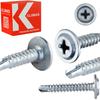
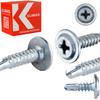
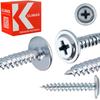
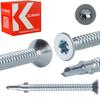
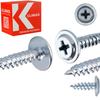
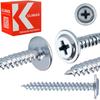
Self-drilling washer screws
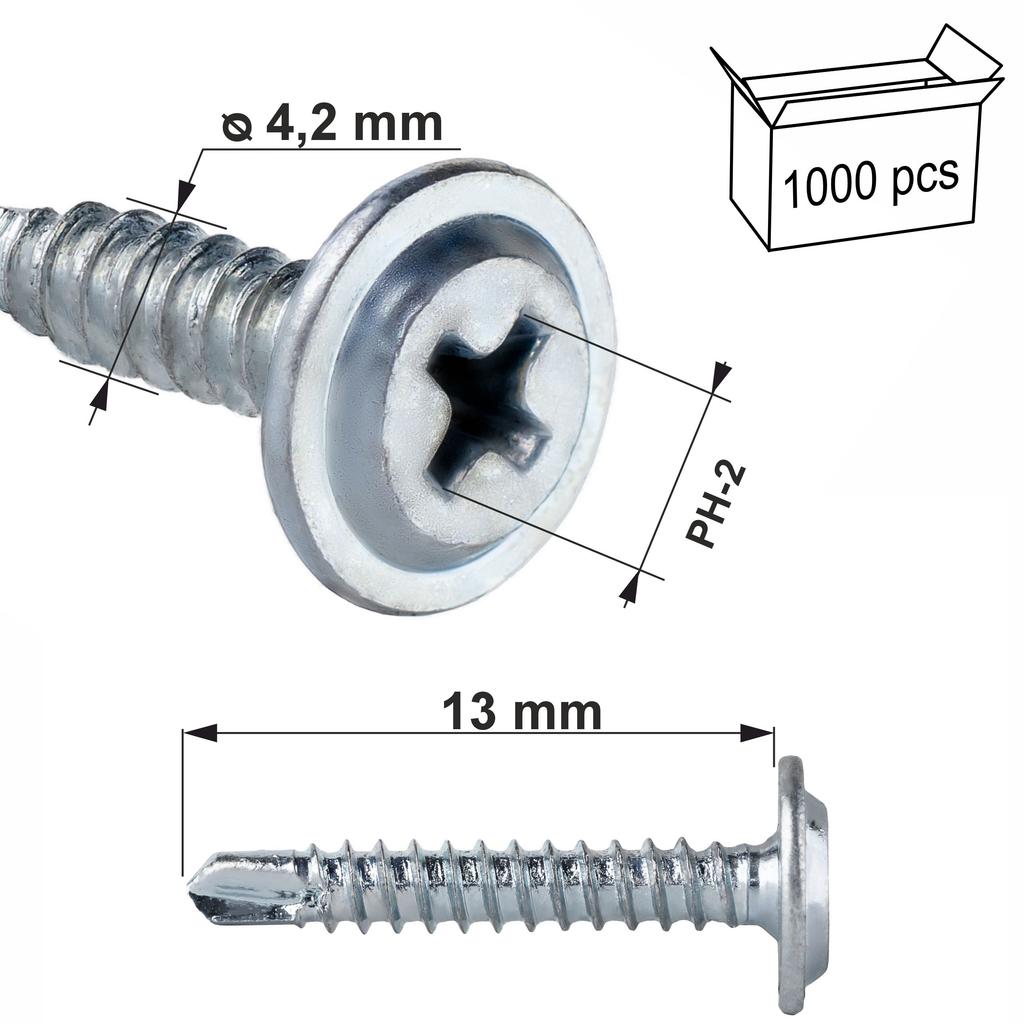
4.2x13 mm, 1000 pcs.
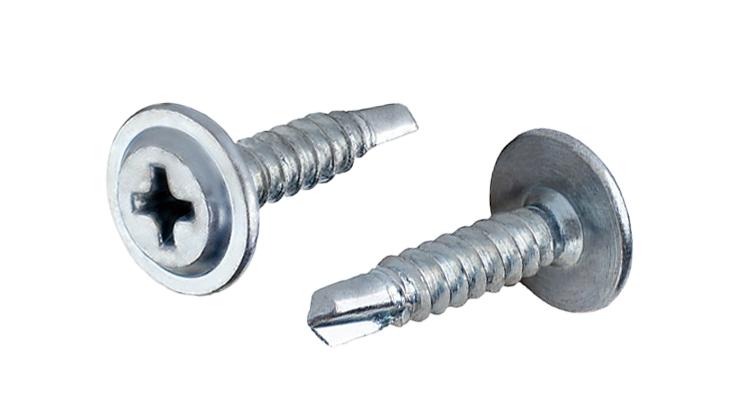
The self-drilling washer screw is made of surface-hardened carbon steel with a 5 µm zinc coating. The screw has a washer head and a self-drilling tip.
Designed for fastening sheets to steel substrates, overlapping thin steel elements, steel profiles up to 2 mm thick, and for the production of door and window joinery.
The most important parameters
• Model:WSPC-42013
• Size: 4.2x13 mm
• Maximum usable length: 3 mm
• Packaging: 1000 pcs
• Socket: PH-2
• Drilling capacity up to: 2 mm
• Material: galvanized carbon steel
Original Product of the Renowned Company KLIMAS Wkręt-Met ®
Features and benefits
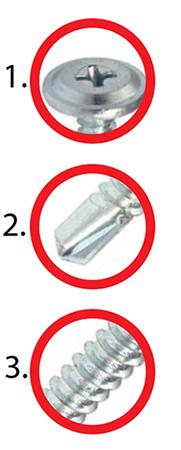
1. Washer head with PH socket
The washer head ensures appropriate pressure on the fastened element.
2. Self-drilling tip
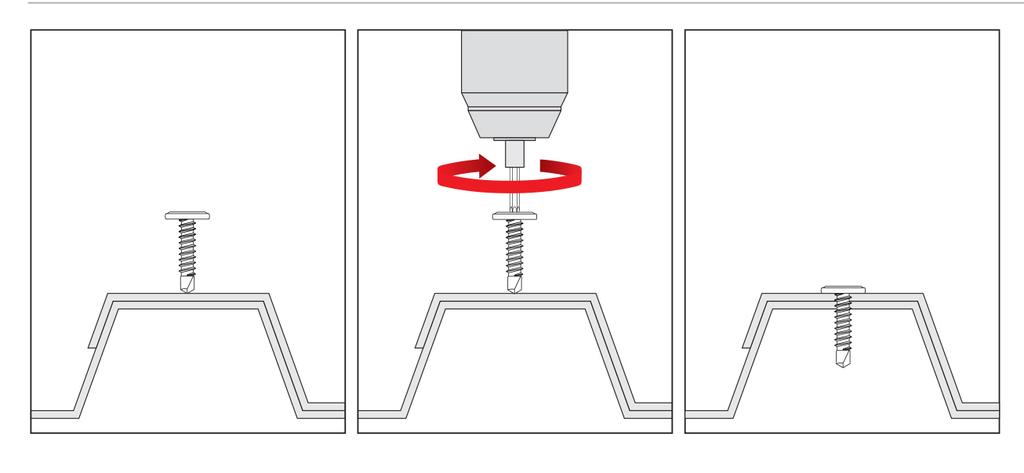
The ability to drill through connected elements up to a maximum thickness of 2 mm in a single operation, shortens assembly time.
3. Anti-corrosion coating - electrogalvanized
Min. 5 μm galvanically applied zinc coating guarantees high corrosion resistance.
Substrates and sample applications
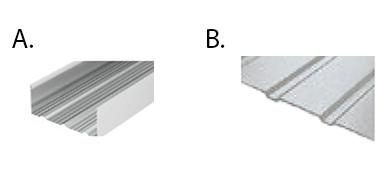
A. Steel profile
B. Steel with a thickness of ≤ 2 mm
1. Sheet metal flashing fastening
2. Fixed corner flashing of a sandwich panel wall
3. Fixed window flashing to a sandwich panel
4. Fixed flashing around an entrance door
5. Sheet metal flashing fastening
6. For fastening thin steel elements and plastics to steel profiles
7. For fastening sheets to a steel substrate
• [ dw ] screw diameter: Ø 4.2 mm
• [ Lw ] screw length: 13 mm
• [ k ] head height: 2.3 mm
• [ F ] head diameter: 11 mm
• [ t fix ] maximum usable length: 3 mm
• socket: PH-2
• number of pcs in the package: 1000
• screw material: heat-hardened carbon steel, galvanized
• drilling capacity: 2 mm
• The screws were made in accordance with the standard PN-EN 14566+A1:2010
The screws we offer are characterized by the highest quality and can be safely used in construction. We make every effort to ensure that the products delivered to our contractors are safe and adapted to specific tasks.
• Before starting the installation, the substrate, its thickness, and environmental conditions (expressed in terms of corrosivity) should be identified, and then screws that meet the above criteria should be selected.
• The screw type, length, and drilling capacity, which depend on the total thickness of the connected elements, should be selected correctly.
• The drilling capacity for each screw is given in the dedicated Technical Data Sheet and in the PN-EN standard and indicates the total thickness of the connected elements.
• The screws should always be installed perpendicular to the substrate surface.
KLIMAS screws - the most common choice of professionals
*the measuring tape is not part of the auction







 Rambursare în caz de nelivrare