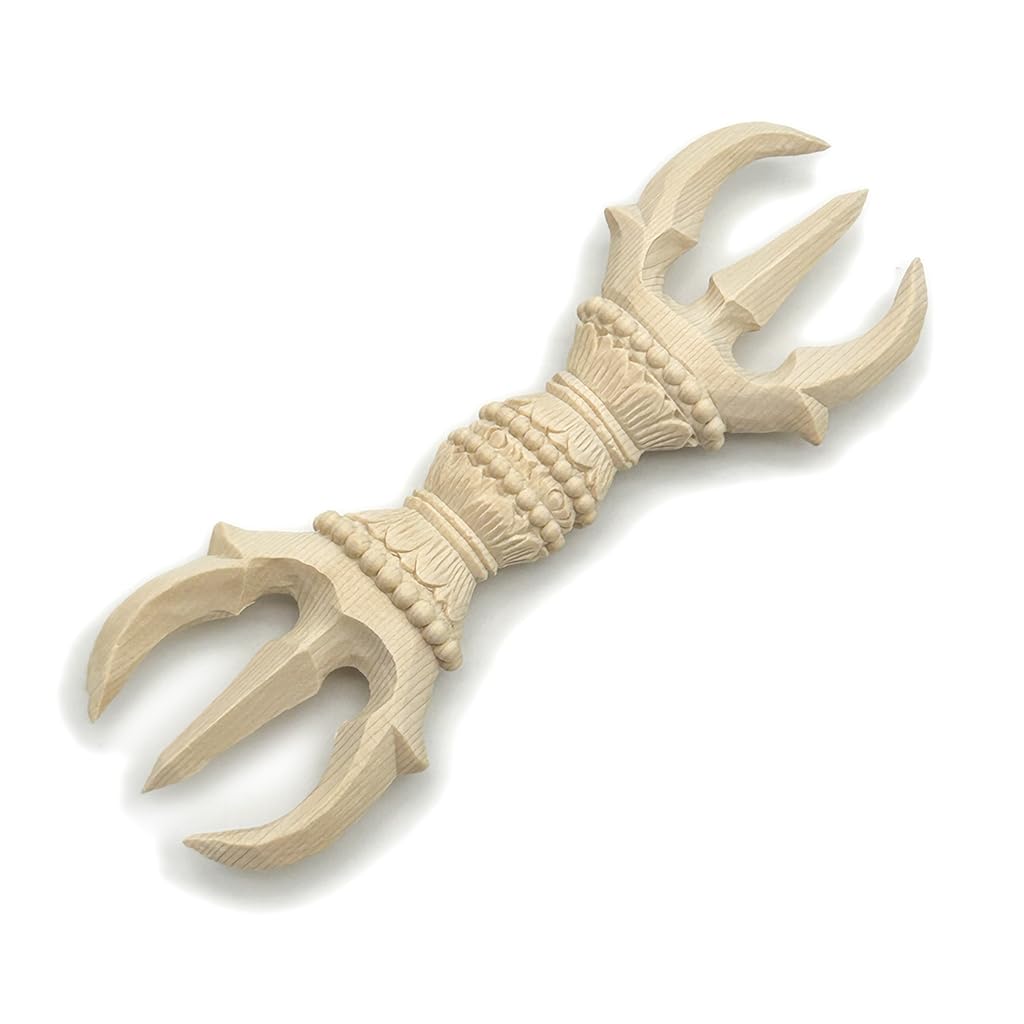
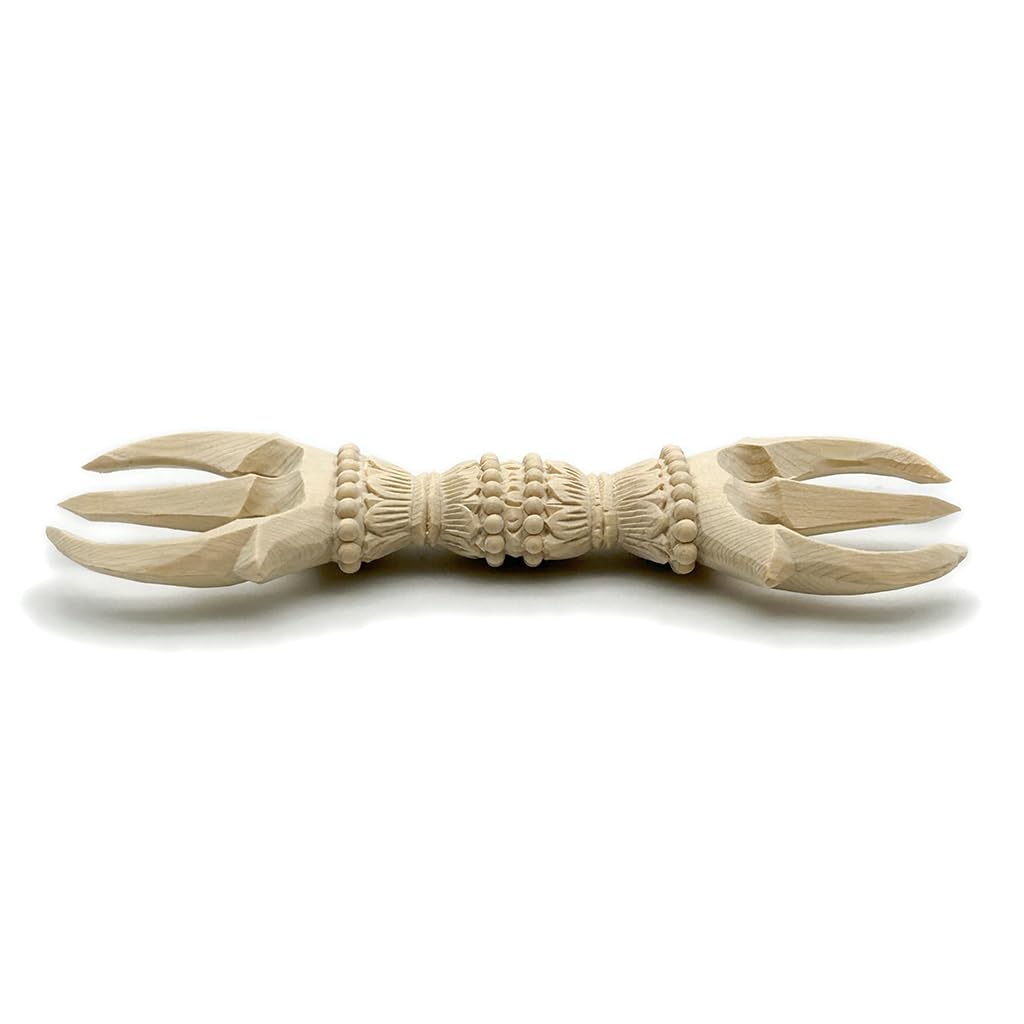
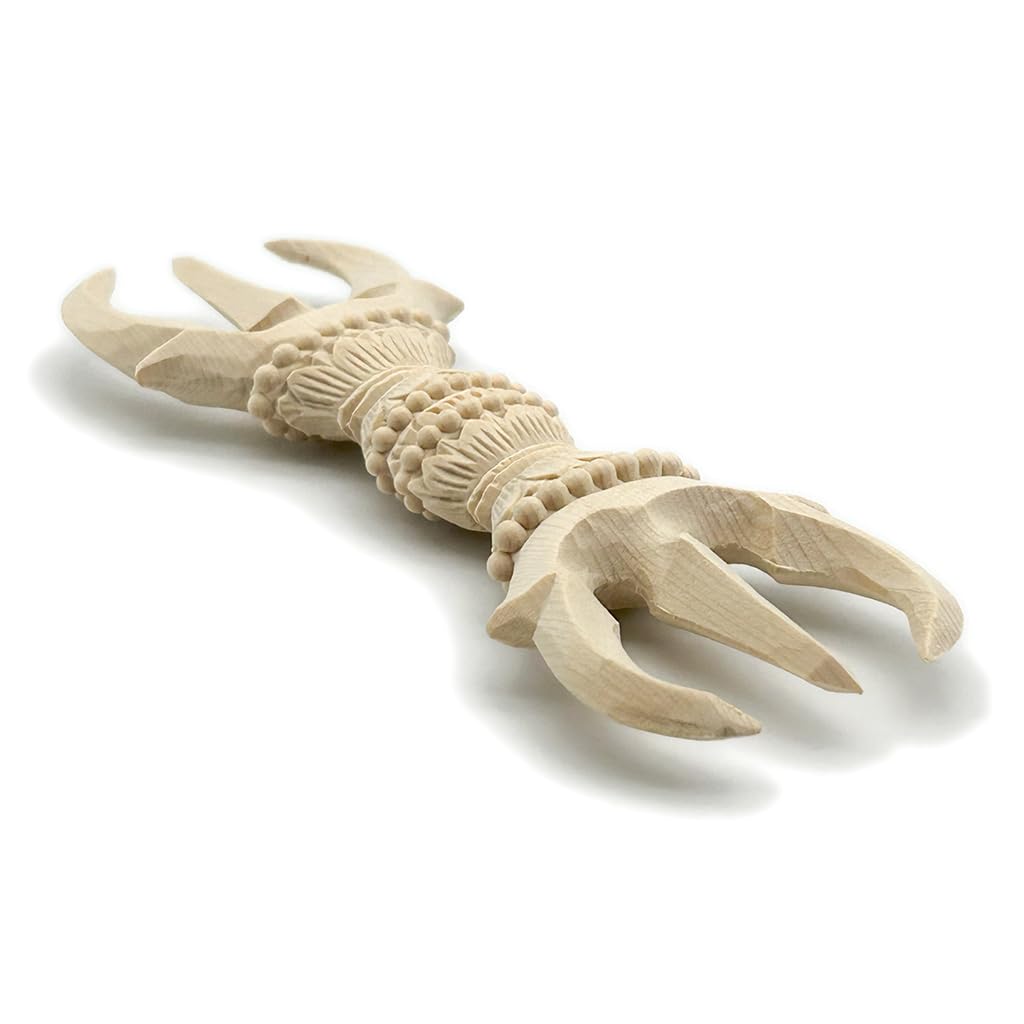
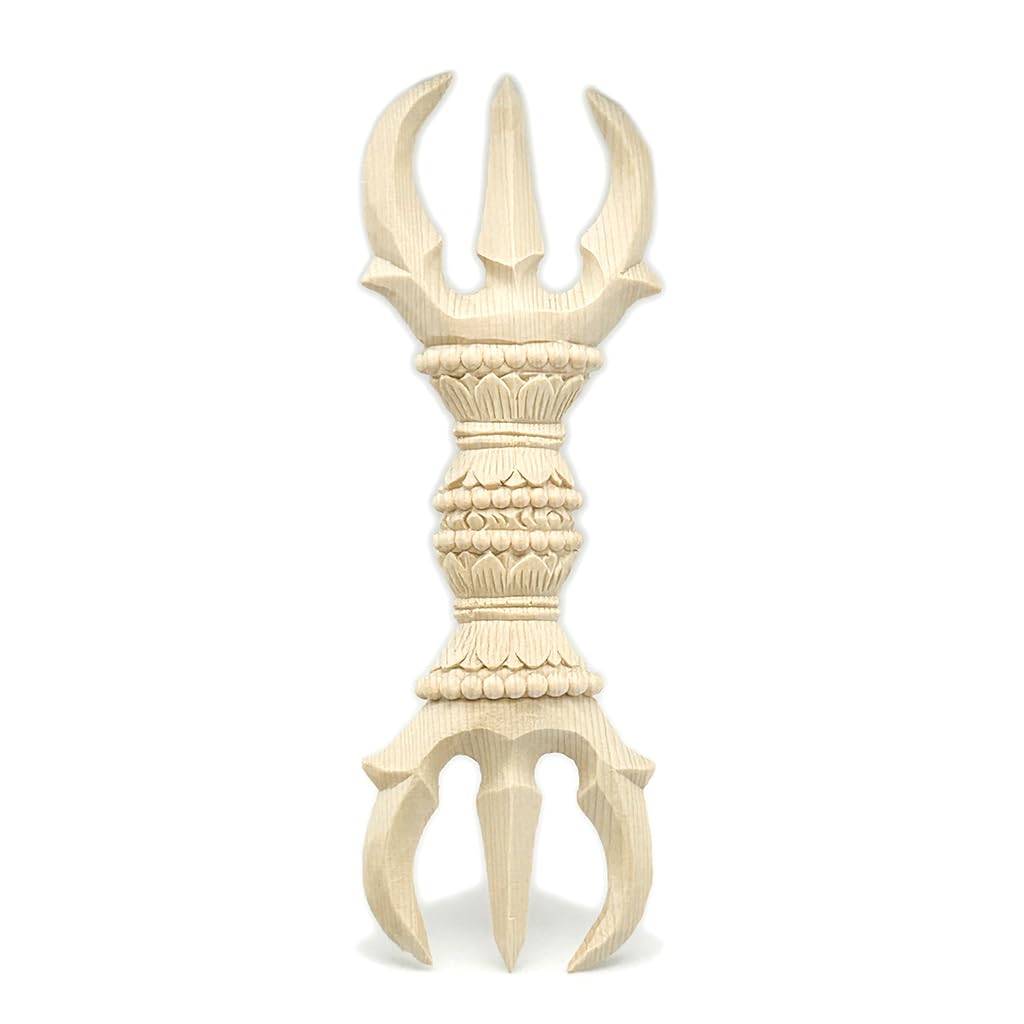
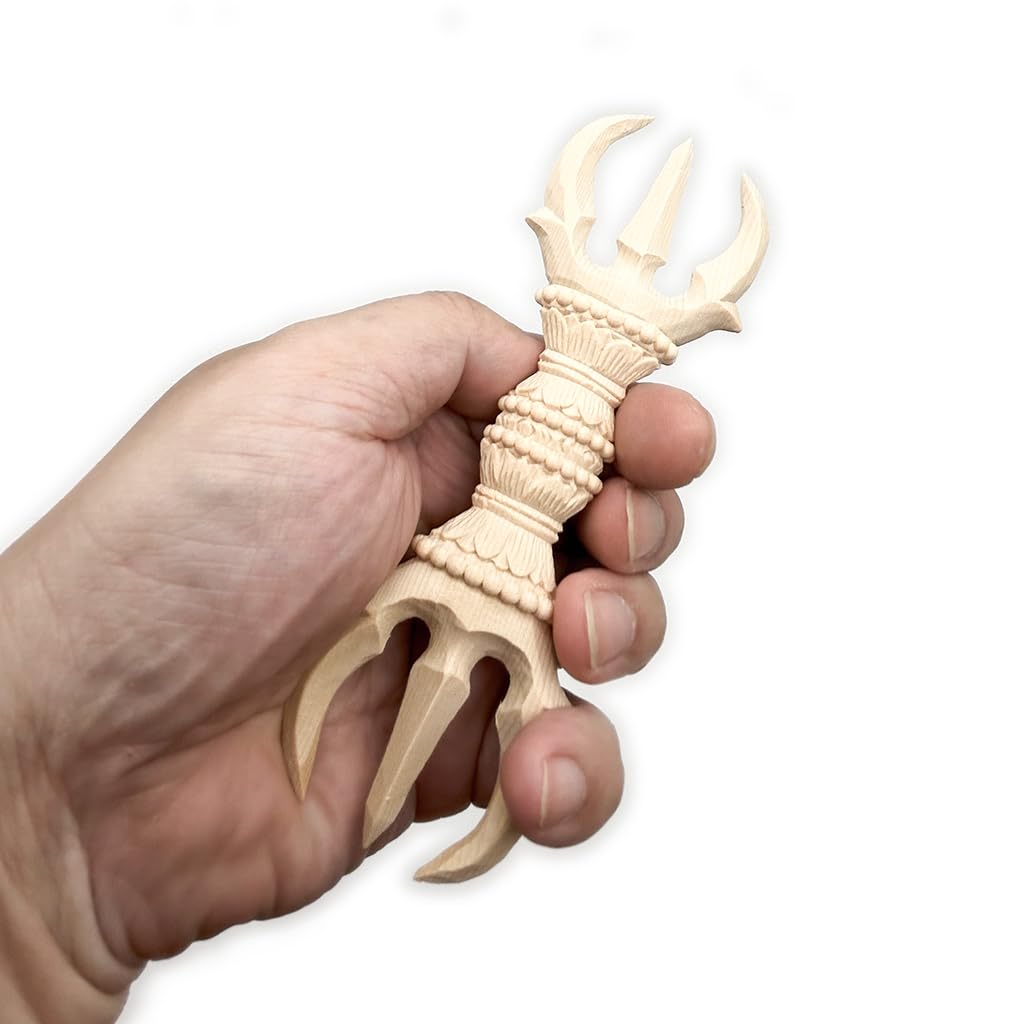
Size: Length 15cm, Height and Width 1.5cm
Material: Cypress (Japanese Cypress)
Country of Origin: China
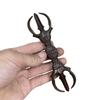
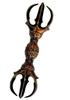
The trident is a type of vajra, with two prongs on each end of the single-pronged vajra, and the sides curved into a hooked shape, resembling a bird's beak. The handle is broadly divided into those with demonic eyes and those with demonic masks. They also represent the three secret teachings of body, speech, and mind, and are used in vajra-te vajra and vajra-gundali, among others, to form the Samaya shape.
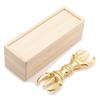
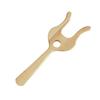
Five-pronged vajra made of cypress. Size: Length 15cm, Maximum Width 1.5cm
The vajra is a ritual implement, likened to a weapon from Indian mythology, representing the Buddhist teachings that eradicate earthly desires and embody the bodhicitta (the desire for enlightenment). It is used in esoteric Buddhist rituals in Shingon and Tendai Buddhism, as well as in Segaki (giving offerings) ceremonies in Shingon, Tendai, and Zen Buddhism. Its basic shape is rod-shaped, with a handle (the demon's eye) in the center. The demon's eye is visualized as Dainichi Nyorai, and practitioners grasp its bulge as a form of ritual to become one with Dainichi Nyorai. Spear-shaped blades are attached to the top and bottom. There are several variations depending on the number and shape of the blades, each with its own name. The trident is a type of vajra, with two blades attached to both ends of the single-pronged vajra, and the sides of the blade are curved into a hook shape, resembling a bird's beak. The handle is broadly divided into those with demon's eye and those with demon's mask. It also represents the three teachings of the three mysteries of body, speech, and mind, and is considered to be of the Samaya shape in vajra-te vajra and vajra-gundali. It was used to make wishes come true, improve luck, ward off misfortune, and ward off evil spirits. You can carry it with you as a talisman or keep it indoors.